
Affiliate marketing is often not a brand's largest revenue source, yet: it often provides the highest ROI. That high ROI makes a lot more sense once you understand how affiliate marketing works and why performance-based payouts keep costs aligned with actual results.
IAB Australia did a survey and 84% of marketers rated affiliate marketing ROI as 7 out of 10 higher than other marketing channels. Major brands often get 5% - 25% of their overall online sales from affiliate marketing.
To get similar results, WordPress store owners can use affiliate marketing plugins. To assist you with selecting the right plugin, we have reviewed the top options below.
What is a WordPress affiliate marketing plugin?
Before looking at the best tools, let’s clarify what is a WordPress affiliate marketing plugin.
A WordPress affiliate marketing plugin is a tool designed to help merchants start, manage, and optimize their affiliate marketing programs.
These plugins include features such as ready-to-use templates, automatic tracking, and A/B testing to simplify affiliate marketing. One example of such a tool is ReferralCandy, which can be used to create affiliate and referral programs.
Why do you need an affiliate marketing plugin?
The main reasons why you should invest in an affiliate plugin include:
- Cost-effective marketing. The only real cost of affiliate marketing is r.
- Grow your audience. Affiliate marketing plugins enable you to grow your audience by tapping into the power of affiliate marketers.
- Build credibility. Affiliate marketing plugins allow you to partner with experts, influencers, and bloggers within your niche, which can help you build credibility.
- Improve your website SEO. When affiliate marketers link to your affiliate landing page from their own blog or a website, the backlinks you gain improve your website's SEO. The top affiliate plugins enable you to create linkable affiliate landing pages.
What features to look for in a WordPress affiliate marketing plugin?
So, what features should an affiliate plugin have?
This is what we recommend:
- User-friendly dashboard. Look for a plugin where you and your merchants can access all the necessary information quickly.
- Link management. Affiliate links that can be shortened and cloaked are better protected against hijacking and look cleaner.
- Automation. Automation features, such as the ability to send emails, fraud protection, and automated enrollment, save you time from repetitive tasks. Additionally, reviewing automation workflows against an ISO 27001 checklist ensures they comply with proper data security standards and reduce the risk of information leaks.
- Ready-to-use templates. Your affiliate plugin should have templates for sending emails and creating landing pages.
- Third-party integrations. Integrations with ecommerce platforms and marketing tools are essential for streamlining the affiliate marketing process.
- Analytics and reporting. A must for tracking the performance of your affiliate program.
- Cost-effectiveness. Choose an affiliate plugin that fits your budget. A free trial should be available to test out the platform's features.
20+ best WordPress affiliate marketing plugins in 2026
For each plugin, we will break down the key features, customer reviews, who it is suitable for, and the pros and cons.
With this information, you can better understand the differences of each plugin.
1. ReferralCandy

- WordPress rating: 4.9 out of 5.0 stars (200+ reviews)
- Pricing: Paid plans start from $59/month
- Free trial: 14-day free trial
- Best for: Brands wanting to create a robust affiliate program
With ReferralCandy, you can create, manage, and automate your affiliate and referral programs for WooCommerce stores.
ReferralCandy's key features include all-in-one affiliate and referral management, post-purchase popups and emails, automated customer rewards, and fraud detection.
You can use ReferralCandy's editor to design affiliate and referral programs to match your brand colors. ReferralCandy allows you to track and analyze the performance of your affiliate and referral programs.
ReferralCandy is available in the WordPress Plugin Directory as well as in the Shopify App Store. It also offers various other third-party integrations, such as with Mailchimp, Klaviyo, Google Analytics, and ReCharge.
Pros and cons
- All-in-one affiliate and referral marketing solution
- Integration with WooCommerce, Shopify, and other ecommerce platforms
- Integrations with marketing tools like Klaviyo, ReCharge, Mailchimp, and more
- Automation tools for detecting fraud, sending emails, and inviting customers
- Admin dashboard for tracking customer insights and industry benchmarks
- Templates for affiliate landing pages and emails
- Fair pricing and a 14-day free trial are available
2. Pretty Links

- WordPress rating: 4.8 out of 5.0 stars (1,220+ reviews)
- Pricing: Paid plans start from $99.60/year
- Free trial: No free trial is available
- Best for: Displaying affiliate links in a clean, short, and cloaked way
With Pretty Links, you can turn long and unclean URLs into short, cloaked affiliate links using your own domain name. The links can be added to any page you want, including emails, websites, social media, and more.
Here is an example of how the cloaked links look with Pretty Links:

Pretty Links creates the cloaked link automatically, but you can create your own custom slug if you wish.
In addition to link cloaking, Pretty Links provides tracking and analytics features. You can see where the link traffic comes from, the browser, OS, and the host. You can also create reports showing the number of clicks per day in a configurable chart.
Pretty Links is available in the WordPress Plugin Directory. It can be used on other ecommerce platforms, but it does not offer specific apps for them.
Pros
- An easy-to-use platform for creating clean and on-brand affiliate links
- Simple admin dashboard to manage the affiliate links
- Reporting and analytics for following the performance
- Supports three link redirect types: 301, 302, and 307 redirects
- A centralized platform for managing and copying all of the links
- Ability to create Stripe-integrated links for selling affiliate products
Cons
- Only offers yearly plans, which may be too long for some brands to commit to
- Doesn't have more extensive affiliate program management features
3. ThirstyAffiliates

Free trial: No free trial available
Pricing: Paid plans start from $99.60/year (billed annually)
WordPress rating: 4.6 out of 5.0 stars (249 reviews)
Best for: WordPress site owners who want clean, branded affiliate links (cloaking + organization) with lightweight reporting
ThirstyAffiliates is a long-running WordPress plugin built around link management: it helps you store all affiliate URLs in one place, create short/branded redirects, and insert links into posts quickly. It’s commonly used on content-heavy WordPress sites (blogs, review sites, niche publishers) where link hygiene and consistency matter as much as tracking.
Many stores pair a link manager like ThirstyAffiliates with a dedicated platform such as ReferralCandy for running referral, affiliate, and influencer marketing programs end-to-end.
Pros
- Central dashboard to organize affiliate links across your site
- Branded, shortened links with cloaking for cleaner placement in content
- Quick link insertion workflows for editors writing frequently
Cons
- No free trial available
- Focused on link management; broader affiliate program operations (applications, partner portals, payouts, workflows) typically require additional tools
4. SliceWP Affiliates

- WordPress rating: 4.9 out of 5.0 stars (90+ reviews)
- Pricing: Paid plans start from $229/year
- Free trial: No free trial available
- Best for: WordPress store owners seeking an all-in-one affiliate management solution
SliceWP aims to be an all-in-one plugin for managing your affiliate program on a WordPress site. Its features include an affiliate dashboard for managing affiliate signups, real-time tracking of clicks, referrals, and conversions, and scheduled automatic payouts.
SliceWP makes the setup process easy, and you can create and customize custom pages for affiliates to sign up on. The affiliates' commissions can be set at a percentage or at a fixed rate.
Many of SliceWP's features are available as add-ons, which you have to pay extra for. The add-ons include third-party integrations, PayPal payouts, custom affiliate slugs, affiliate landing pages, and recurring and lifetime commissions. The extra cost is a slight disadvantage compared to competitors like ReferralCandy, which offers many of the features as part of its standard plan.
Pros
- A wide range of affiliate management features
- Advanced reports and analytics for understanding affiliate program performance
- PayPal payout option for paying the affiliates
- Affiliate dashboard for managing affiliate links and other parts of the program
- A variety of automation features are available, including automated emails, affiliate approvals, and social sharing
- You can customize the affiliate registration form to match your brand colors
Cons
- Many important add-ons come with an extra cost
- No monthly plans are available, unlike with solutions like ReferralCandy
- All-in-one solution for affiliate programs, but does not support referral programs
5. MonsterInsights

- WordPress rating: 4.5 out of 5.0 stars (2,960+ reviews)
- Pricing: Paid plans start from $99.60/year
- Free trial: Free plan available
- Best for: Utilizing Google Analytics for your affiliate program
MonsterInsights makes it easy to integrate and manage Google Analytics on your WordPress site. While it isn't designed exclusively for affiliate programs, it is a great way to track affiliate link performance.
The integration process to Google Analytics is simple. After done, you can track the performance of your affiliate links, as well as your customers' age, device, gender, and other information that can help improve your affiliate performance. You can also see more conversational statistics, such as top revenue sources, conversion rate, average order value, and top referrals.
All data is available in the reports MonsterInsights provides you, including ecommerce reports, audience reports, publisher reports, content reports, landing page reports, and more. MonsterInsights has a Pro version available, but the free version gives you access to many features.
Pros
- Easy Google Analytics integration available
- Free plan that gives access to most features
- Affiliate and link tracking
- 10+ reports available for data about your customers and affiliate link performance
- Integrations with other WordPress plugins, like AffiliateWP, Pretty Links, and WooCommerce
Cons
- Only an annual subscription option available for the paid plans
6. Coupon Affiliates
- WordPress rating: 4.9 out of 5.0 stars (60+ reviews)
- Pricing: Paid plans start from $19.99/month
- Free trial: 7-day free trial available
- Best for: Managing a coupon-based affiliate program on a WooCommerce store
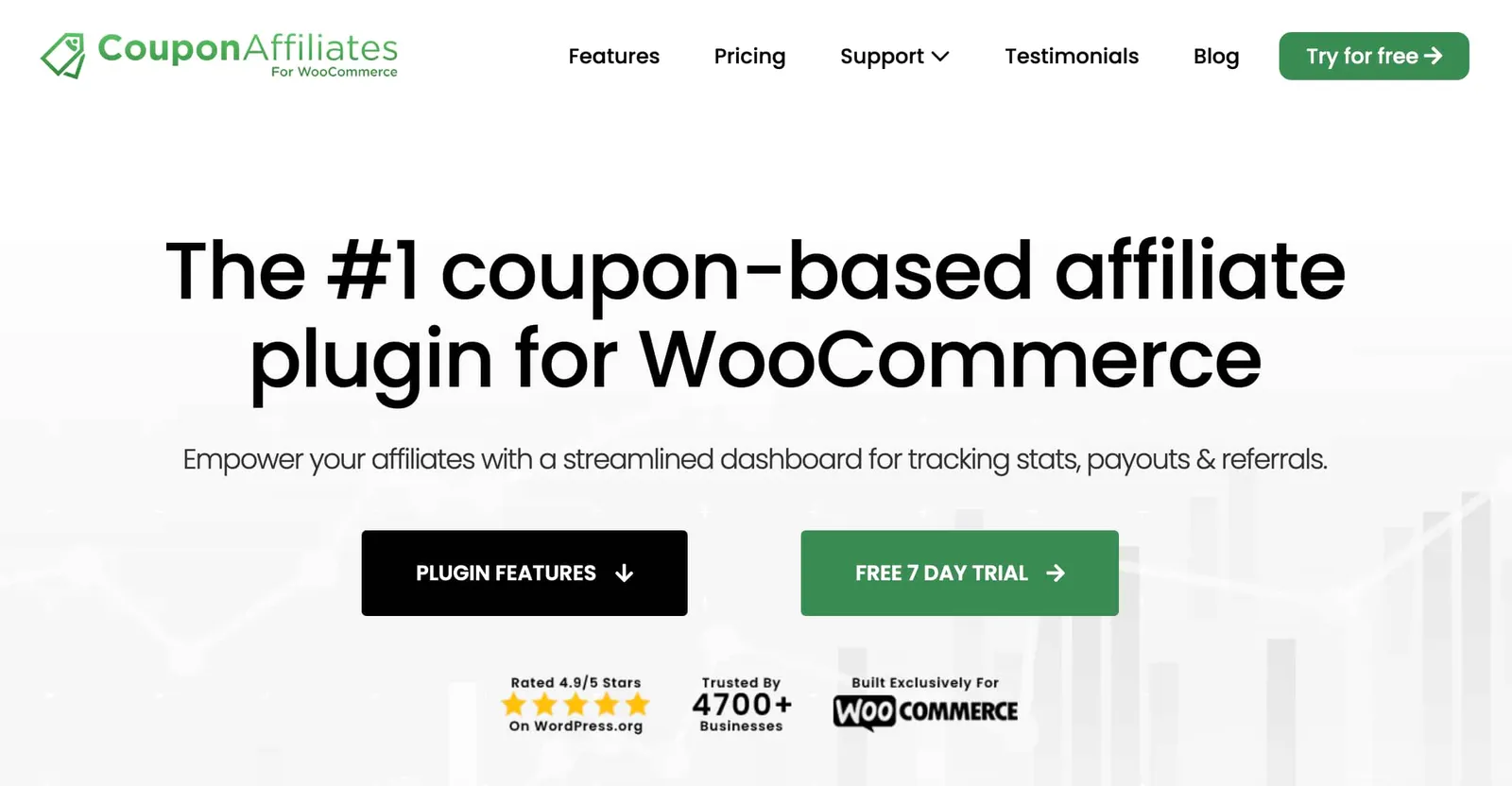
Coupon Affiliates is unique because it focuses on coupon-based affiliate marketing, which allows store owners to assign unique coupon codes to affiliates.
To manage the coupons, you get access to an admin dashboard. Affiliate users can track and submit payout requests through the available affiliate dashboard. From the same page, affiliates can generate referral URLs, set up link tracking, create referral campaigns, do link cloaking, and share links on social media.
Coupon Affiliates offers different reports and analytics to track affiliate coupon performance.
Pros
- Affiliate dashboard for tracking performance
- Affiliate statistics, such as sales, commissions, recent orders, and more
- Commission and payout tracking for affiliates
- One-click Stripe and PayPal payout option
- Also possible to run referral and influencer programs
Cons
- Offers only basic referral and influencer program capabilities, as compared to alternatives, like ReferralCandy
7. BetterLinks
- WordPress rating: 4.8 out of 5.0 stars (55+ reviews)
- Pricing: Paid plans start from $79/year
- Free trial: Free plan is available
- Best for: Shortening links and tracking their performance
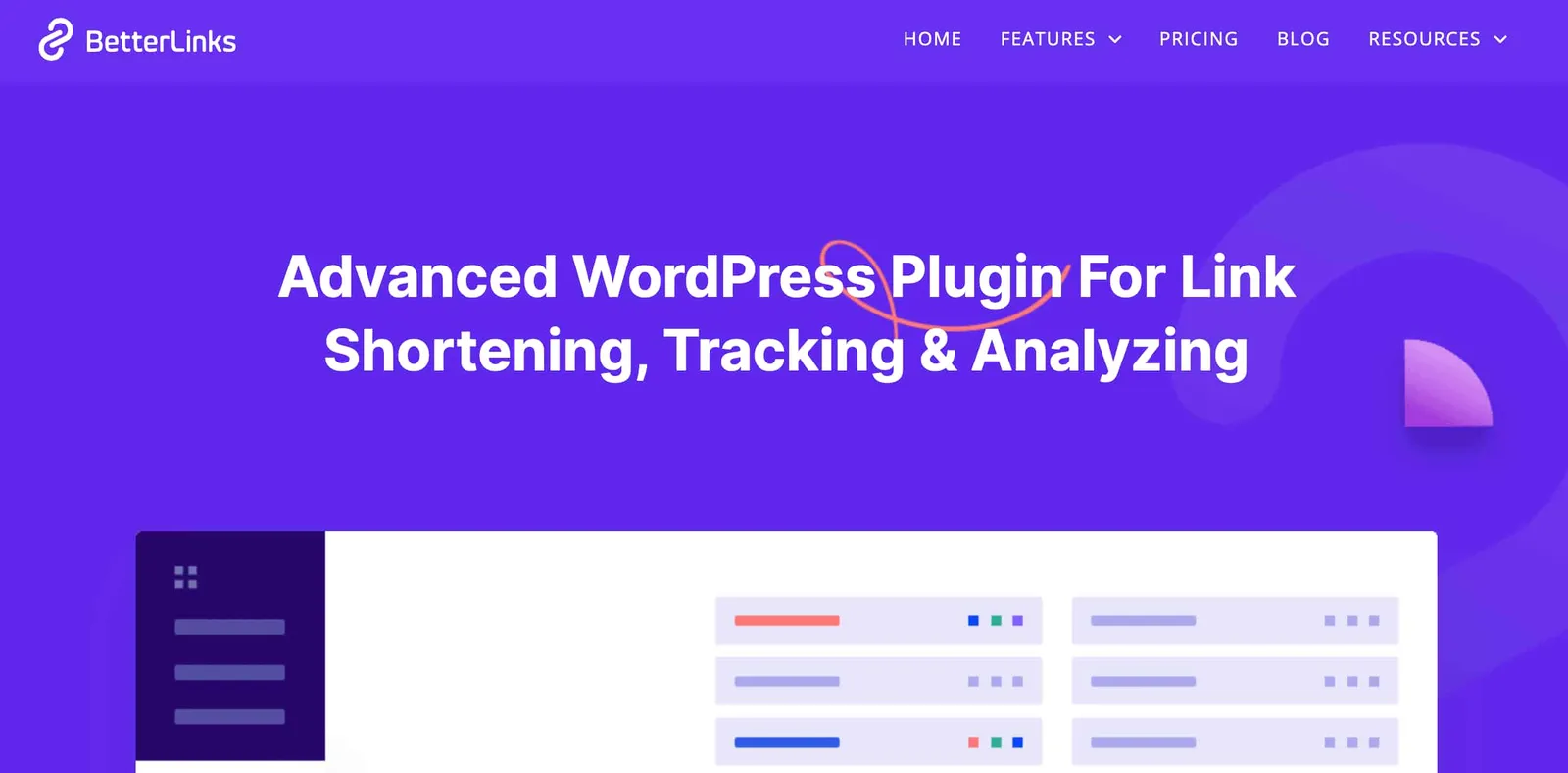
BetterLinks is a URL-shortening solution for WordPress sites. With it, you can create, shorten, and track the performance of any URL, including affiliate link URLs. The platform isn't made specifically for affiliate links, but it works great for them as well.
You can split-test different links with dynamic redirects, create 301, 302, and 307 redirects, check broken links, and track your performance. BetterLinks provides reports on the click-through rate, top referral links, top social media links, and more.
If you want more advanced features, BetterLinks has a Pro version that includes more advanced analytics, Google Analytics integration, Facebook Pixel tracking, the broken link checker, and the ability to control and manage user roles.
Pros
- Free plan available
- Admin dashboard to track affiliate links
- Ability to shorten links easily
- Multiple link direct options are available
- Offers migration from third-party apps, like PrettyLinks and ThirstyAffiliates
Cons
- It isn't specifically made for affiliate programs, so it misses features such as an affiliate dashboard, customizable affiliate landing pages, and fraud protection
8. Skimlinks

- WordPress rating: n/a
- Pricing: Skimlinks retains a specific percentage on every sale you get
- Free trial: Free to join
- Best for: Turning regular product links into affiliate links for content creators
Skimlinks is a content-to-commerce platform designed to help merchants monetize their content through affiliate marketing. It converts regular product links into affiliate links, allowing content creators to earn commissions on sales generated through their content.
Its key features include automatic product link converter, reporting and analytics, content monetization tools, geotargeting, and integrations with third-party software.
Skimlinks is unique in that it is free to use, but they charge a percentage of the sales you make. This can be a disadvantage for brands with high sales volumes, but it can also be advantageous for merchants with low sales volumes.
Pros
- Fast and easy way to convert regular product links into affiliate links
- Affiliate dashboard for affiliate partners to manage affiliate links
- Extensive analytics for tracking affiliate link performance
Cons
- Skimlinks charge a commission, which can get expensive quickly
9. Post Affiliate Pro

- WordPress rating: 4.6 out of 5.0 stars (20+ reviews)
- Pricing: Paid plans start from $139/month
- Free trial: 30-day free trial is available
- Best for: Starting a WooCommerce affiliate program
Post Affiliate Pro helps WordPress store owners create, manage, and optimize affiliate programs. It’s key features include an affiliate dashboard for management and analytics, as well as fraud protection.
One unique feature of Post Affiliate Pro is the marketing materials it provides to its new users. These include ready-to-use banners, discount coupons, and smartlinks, which can be used on your website and ads.
Post Affiliate Pro includes automation features such as email sending, social media posting, and automated commissions. For analytics, you can see impressions, click-through rates, conversions, sales, and more.
Pros
- Highly customizable affiliate program solution
- Email, social media, and commission automation
- Robust reporting to follow the affiliate program performance
- Offers integrations with multiple different ecommerce platforms
- Extra features, such as the available marketing materials for affiliate partners
- For companies working with Shopify themes and sites, Post Affiliate Pro also has a Shopify integration
Cons
- The pricing plans can be too expensive for smaller businesses with limited budgets
- Long setup process, and the available tools have a long learning curve
10. Easy Affiliate
- WordPress rating: 4.2 out of 5.0 stars (30+ reviews)
- Pricing: Paid plans start from $99.60/month/year,
- Free trial: Not available
- Best for: Creating and managing a WordPress-based affiliate program
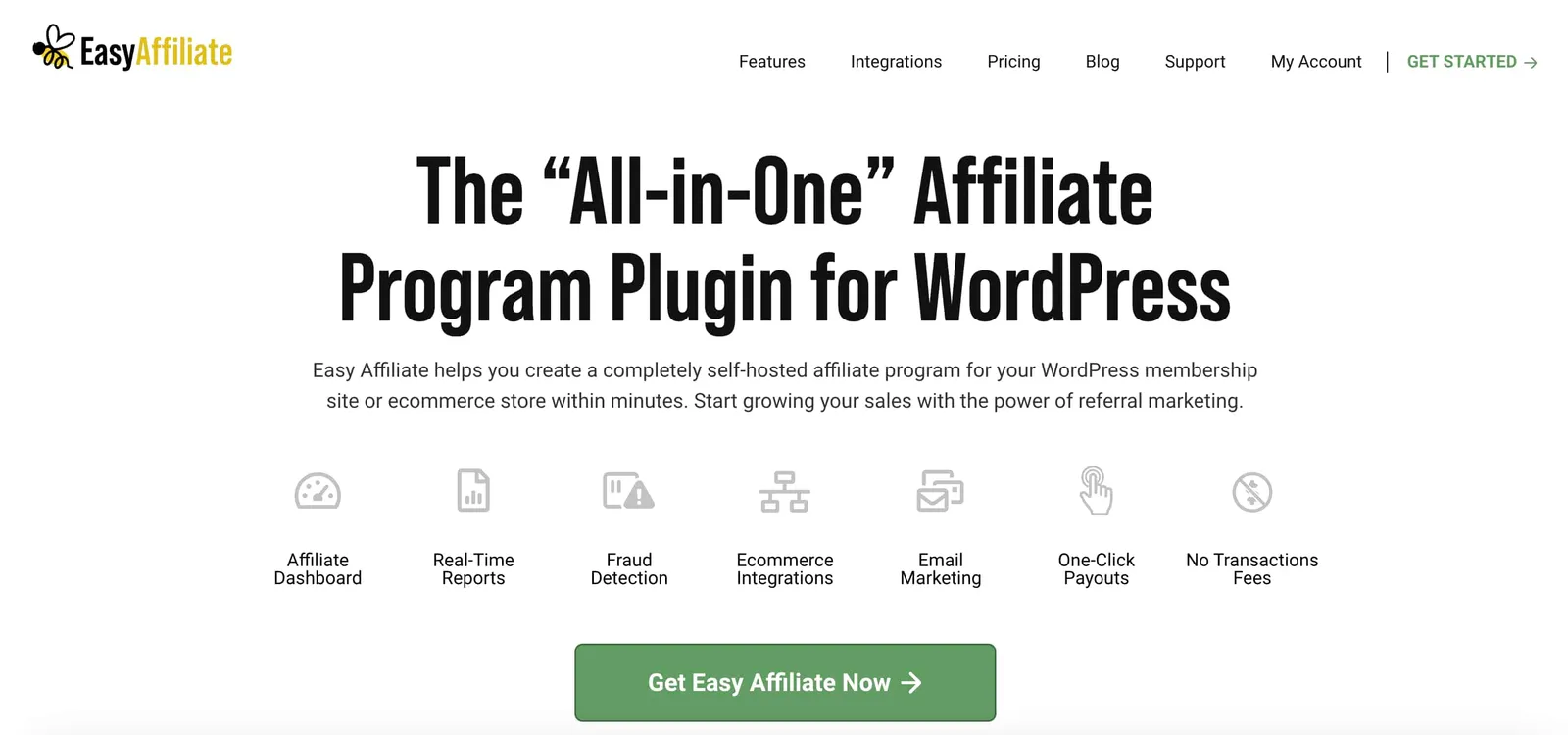
Easy Affiliate’s key features include affiliate and commission management, tracking and reporting, fraud protection, custom link generation, and affiliate payout management.
One unique feature of Easy Affiliate is the ability to create an affiliate application process. It requires visitors to apply for your affiliate program before they are eligible to join.
Pros
- Affiliate dashboard to add affiliate links and manage them
- Real-time reports for tracking the performance
- Custom dashboard for administrators and affiliates
- 1-click PayPal payout for affiliates
- Integrates with WordPress and other major ecommerce platforms
Cons
- Doesn't include the tools to send affiliate emails. It has to be integrated with third-party software for that functionality
11. Goaffpro

- WordPress rating: 4.8 out of 5.0 stars (35+ reviews)
- Pricing: Paid plans starting from $29/month
- Free trial: Free plan available
- Best for: Running affiliate and influencer marketing campaigns
With Goaffpro, ecommerce merchants can launch and manage their affiliate programs. The platform offers a custom-branded affiliate portal, several commission options, affiliate tracking, and link sharing.
Goaffpro’s analytics provide data such as clicks, sales, new signups, net and gross revenue, and cost per conversion. The data is quite extensive and one of Goaffpro's standout features.
Goaffpro not only offers affiliate marketing tools for WordPress stores, but it is also a popular Shopify app. From the affiliate dashboard, affiliates can share their links and coupons on different social media platforms.
Pros
- Affiliate portal for affiliates to see their earnings
- Extensive analytics to see how your affiliate program performs
- Easy one-click PayPal payout for affiliates
- Free plan for small-scale affiliate programs
- Integration with WordPress and other ecommerce platforms, such as Shopify and BigCommerce
- Customers mention that Goaffpro has reliable support
Cons
- A few G2 users mention that the free plan is limited and you quickly need to upgrade to one of the paid plans
12. YITH WooCommerce Affiliates
- WordPress rating: 4.4 out of 5.0 stars (90+ reviews)
- Pricing: €179,99 per year
- Free trial: Free plan available
- Best for: Simple affiliate program management
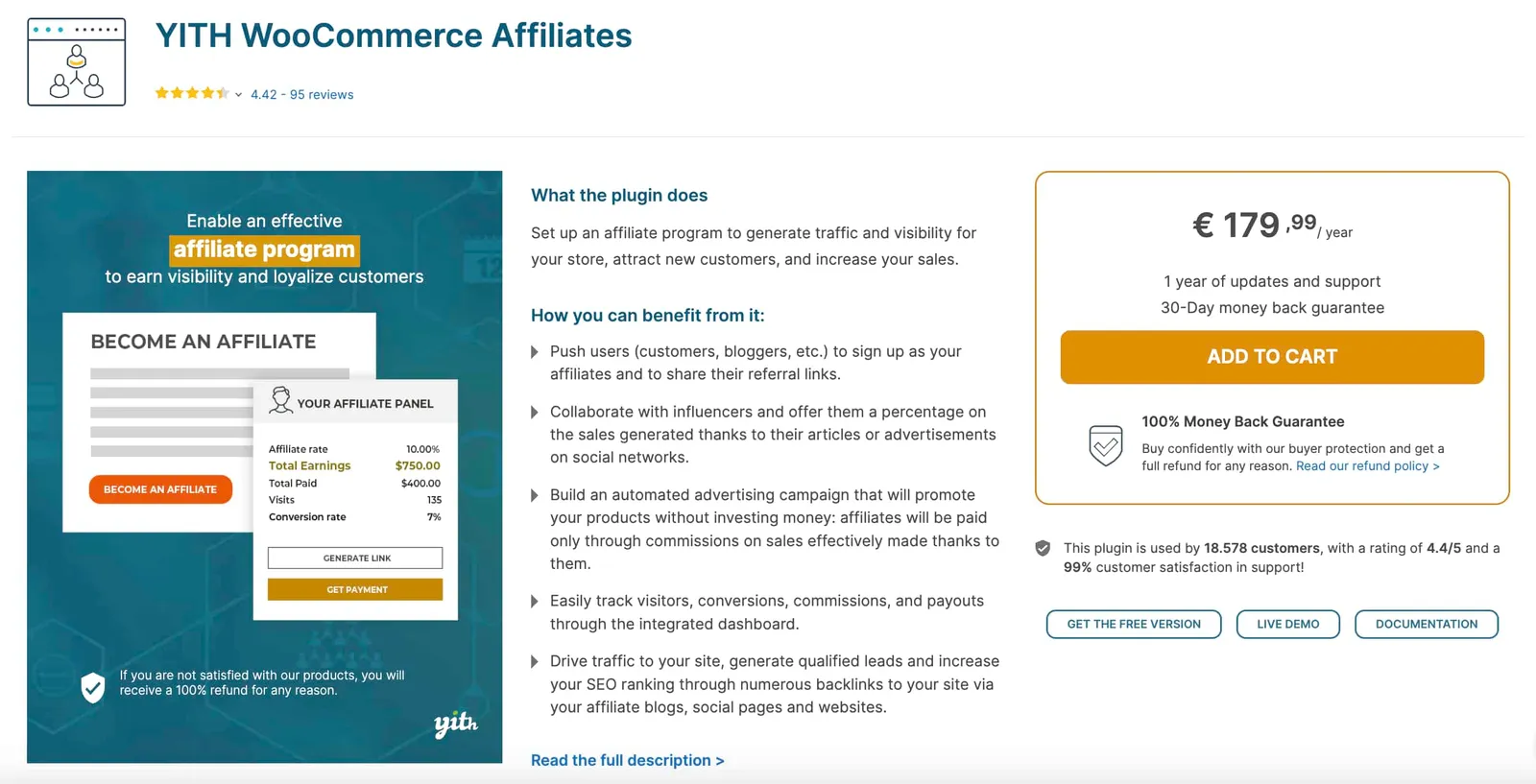
YITH WooCommerce Affiliates lets you quickly create an affiliate registration page and start earning money. You can create a custom registration form and decide which one of your customers get accepted to the program.
The tool comes with an affiliate table, where brands as well as affiliates can track their commissions, earnings, and conversion rates.
For more capabilities, YITH WooCommerce Affiliates integrates with third-party tools.
Pros
- Registration form for affiliates
- Affiliate table for tracking performance
- Commission payment through PayPal and Stripe
- Free plan available
Cons
- Yearly plans only available
- You only get 1 year of technical support
13. AffiliateWP
- WordPress rating: n/a
- Pricing: Paid plans start from $149.60 per year
- Free trial: No free plan available
- Best for: Running an affiliate program on WooCommerce or Elementor
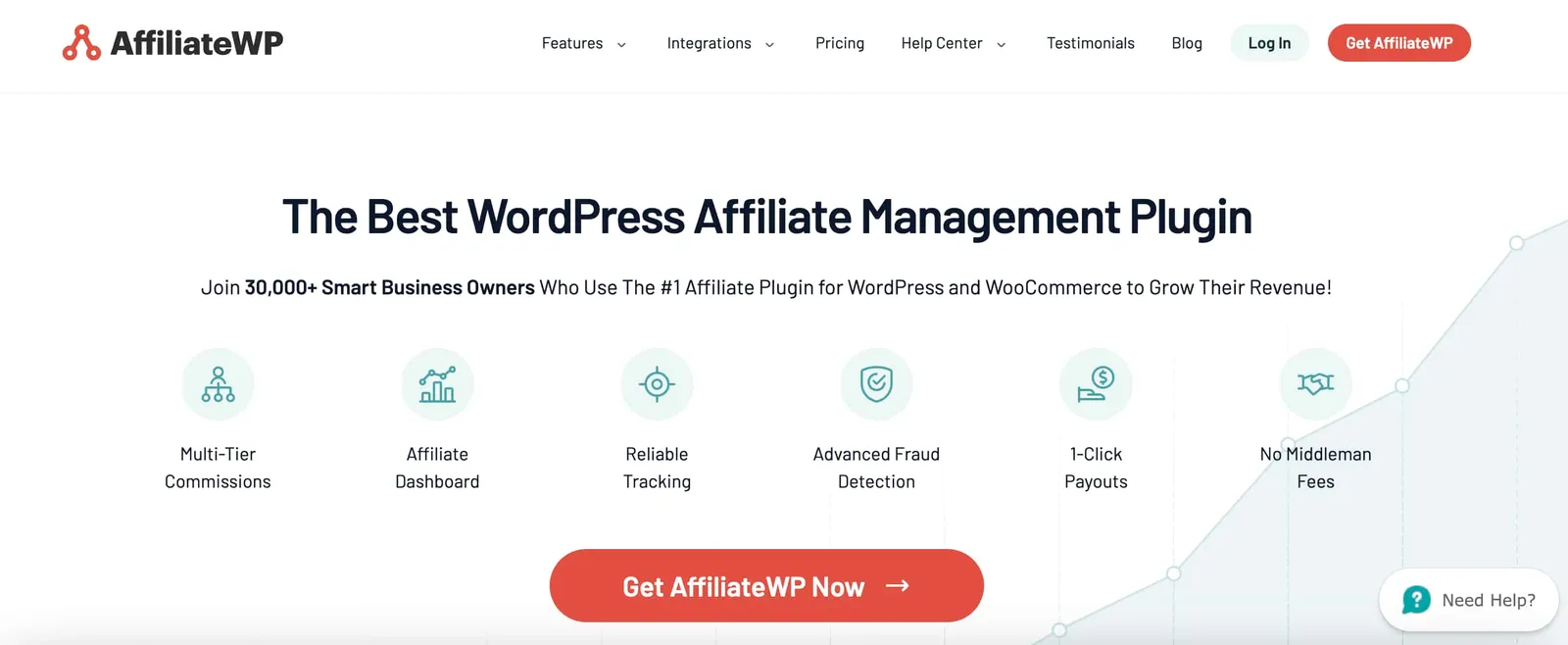
AffiliateWP offers an easy integration with WooCommerce and Elementor stores for running affiliate programs. It has an affiliate dashboard for affiliates, fraud detection, and one click PayPal and Stripe payouts.
Pros
- Ability to create affiliate links, banners, coupons, and landing pages
- Customizable affiliate dashboard
- Reports and analytics
- One click affiliate payouts
Cons
- Yearly plan is only available, which is not ideal if you’re just testing out
14. WP Affiliate Manager

- WordPress rating: 4.1 out of 5.0 stars (60+ reviews)
- Pricing: Paid plans start from $39 per site
- Free trial: Free plan available
- Best for: Running a simple affiliate program
WP Affiliate Manager integrates with WooCommerce and various shopping carts and helps you manage, track, and pay affiliates. The tool comes with email templates, customizable affiliate registration, and basic analytics.
Pros
- Easy installation process
- Real time tracking to see the performance
- Flat rate and percentage based commissions available
- Basic automation tools available
Cons
- No live chat customer support available
- Only the most basic affiliate tools available
- The admin dashboard is not so intuitive
15. Ultimate Affiliate Pro

- WordPress rating: n/a
- Pricing: Starts from $69 per month
- Free trial: No free trial available
- Best for: WooCommerce affiliate management
Ultimate Affiliate Pro is an affiliate program plugin for WordPress and WooCommerce store owners. The tool offers different commission types, such as product rates, membership-tailored rates, and recurring referral rates.
Ultimate Affiliate Pro integrates with different ecommerce, form, and membership platforms for more functionality.
Pros
- Simple PayPal affiliate payouts
- Affiliate portal to track commissions
- You can create affiliate landing pages
- Multi-tier affiliate campaigns
Cons
- The basic plan doesn’t include integrations
- The basic plan only has six months of customer support
16. Easy Affiliate Links
- WordPress rating: 4.2 out of 5.0 stars (30+ reviews)
- Pricing: Paid plans start from $49 per site
- Free trial: Free plan available
- Best for: Managing all of your affiliate links
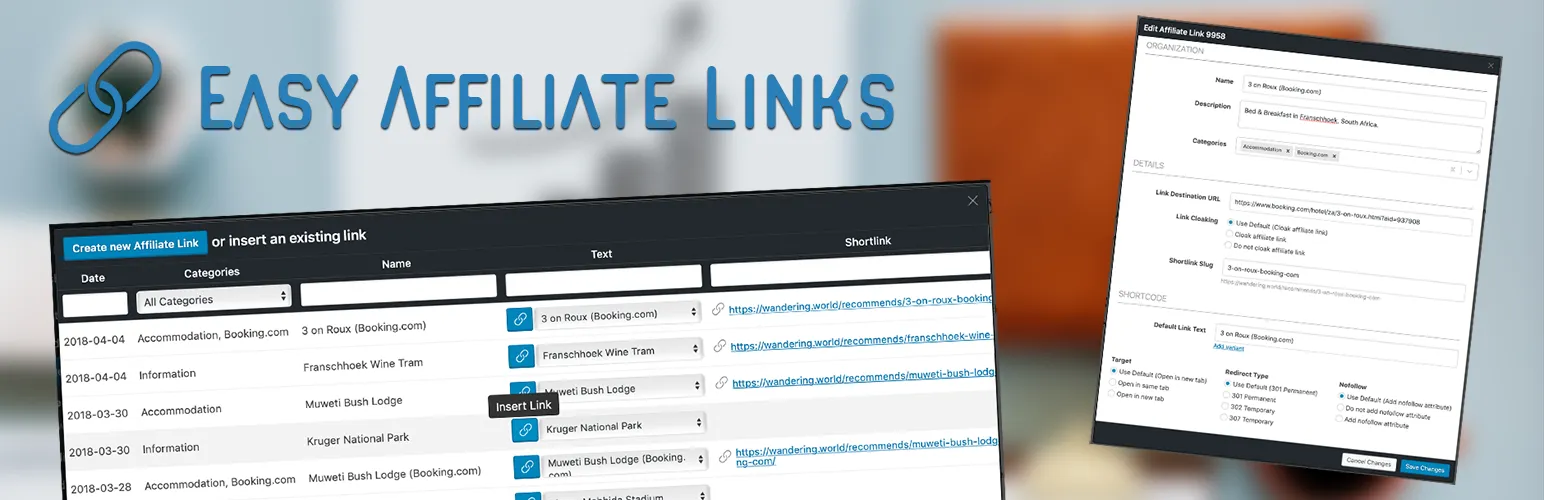
As the name suggests, Easy Affiliate Links offers a simple tool for managing affiliate links. Whether you’re creating a landing page or a blog article, you can add the affiliate links easily to your text.
Easy Affiliate Links is compatible with the WordPress Classic Editor and Gutenberg Block Editor.
Pros
- Works with Elementor and basic WordPress themes
- Ability to create short (cloaked) links
- You can export and import links
- Can be used inside the WordPress text editor
Cons
- Only offers the most basic affiliate link management tools
- Can’t send affiliate emails to invite customers
- Link statistics only for the premium version
17. AAWP
- WordPress rating: n/a
- Pricing: Paid plans starting from $49 per year
- Free trial: No free trial available
- Best for: Managing Amazon affiliates
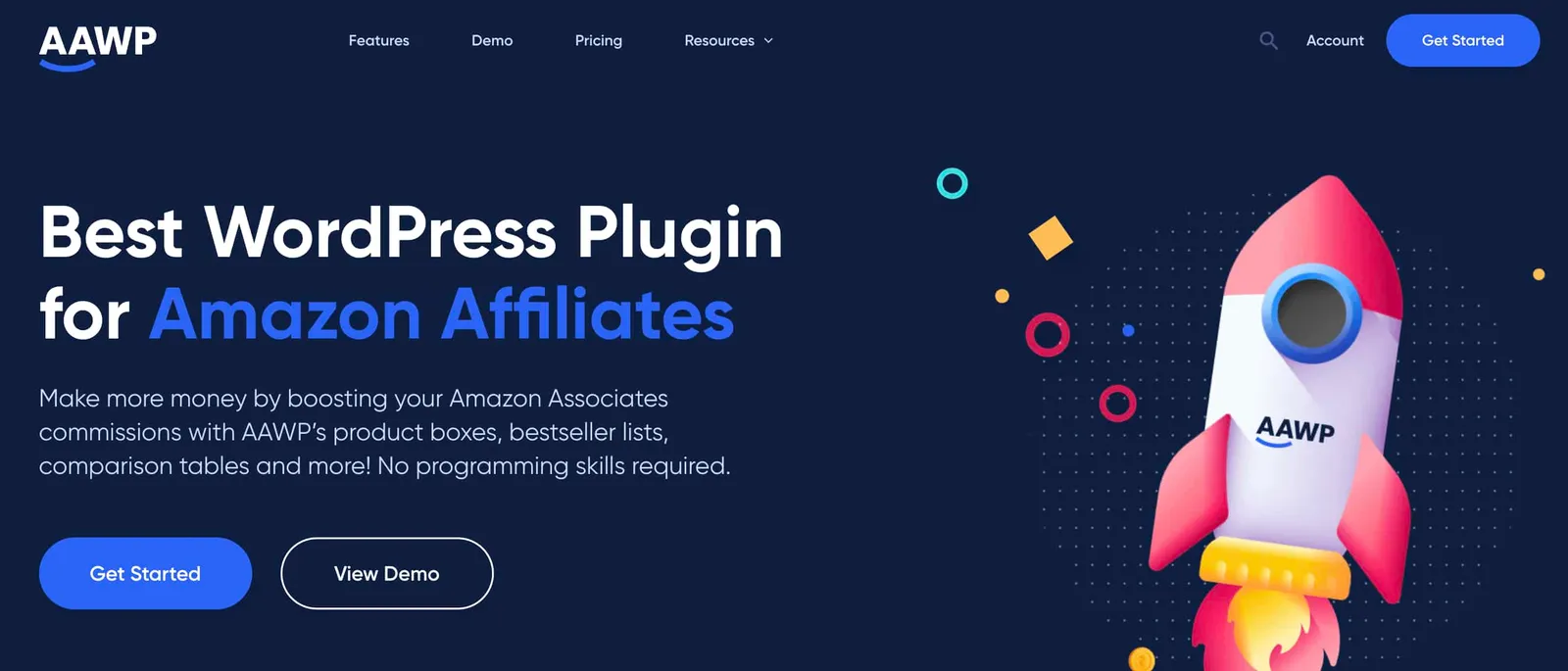
A competitor to EasyAzon, AAWP, lets you create and manage Amazon affiliate links For example, if you run a blog and recommend products to your readers, you can lead them to Amazon through your affiliate links.
AAWP comes with templates, including boxes, lists, and tables. It works on all WordPress themes.
Pros
- Manage Amazon affiliate links from one place
- More features than the competitor EasyAzon
- Works on all WordPress themes
- Product comparison tables
- Reports and analytics
Cons
- No free trial is available
- Lacks third-party integrations
18. AdSanity

- WordPress rating: n/a
- Pricing: Starting from $59 per year
- Free trial: Not available
- Best for: Ad management on WordPress sites
AdSanity lets you display ads anywhere on your WordPress site. To use it, you need to join an ad network and request a code snippet that the ad network will provide.
You can then add the code snippet to AdSanity and display the ad on your website through ready-made blocks, widgets, and shortcodes.
Pros
- Add-ons to extend the functionality
- Templates for showcasing the ads
- Supports almost all ad networks
- Statistics to see the performance
Cons
- Yearly plans are only available
- No free trial available
- Add-ons only for the most expensive plans
19. EasyAzon
- WordPress rating: n/a
- Pricing: Free tool
- Free trial: Free to install
- Best for: Building Amazon affiliate links
Similar to AAWP, EasyAzon lets WordPress users create Amazon affiliate links. With it, you can control affiliate links through site defaults or individually. The links can be set up to open in a new tab, have a no-follow attribute applied, and be cloaked for SEO purposes.
Pros
- Link cloaking options
- Product popup option for more sales
- Simple-to-use software
Cons
- Focuses solely on Amazon affiliate links and is not suitable for other uses
20. Affiliate Coupons

- WordPress rating: n/a
- Pricing: Paid plans start from $29 per year
- Free trial: There is no free trial available
- Best for: Creating affiliate coupons
Affiliate Coupons is a tool for managing coupons on your WordPress site. Each coupon has a title, description, link, and validity date. Affiliates can share these with their audience, and when someone makes a purchase, both parties benefit.
Affiliate Coupons works for all WordPress themes. There are templates you can use to speed up the creation of your affiliate program.
Pros
- Works for all WordPress themes
- Different styles and templates are available
- Manage multiple coupons and vendors
Cons
- Focuses entirely on coupons and misses other important affiliate marketing tools
- Doesn’t support referral marketing
21. Solid Affiliate

- WordPress rating: n/a
- Pricing: $249 for a lifetime license
- Free trial: 7-day free trial
- Best for: Launching WooCommerce affiliate or referral program
Solid Affiliate lets WooCommerce store owners launch affiliate and referral programs. It includes an affiliate program where affiliates can manage referrals and payments.
One of Solid Affiliate's cool features is its marketing assets, such as banner ads and advertising videos. These can be shared with affiliates, who can use the materials to promote your products.
Referral emails can also be sent within Solid Affiliate.
Pros
- All-in-one affiliate management tool
- Marketing materials for affiliates
- Easy set-up process for WooCommerce
- Customizable commission settings
Cons
- Integrations with third-party analytics and marketing tools are lacking
3 questions to help you choose a WordPress affiliate marketing plugin
If you’re unsure what plugin to choose, ask yourself these questions:
- Are the available features enough? Make sure the plugin has templates, advanced analytics, A/B testing, etc.
- What integrations does the plugin have? For example, if you use Klaviyo for email marketing, make sure the plugin integrates with it.
- What is the pricing system like? You want to make sure the provider has fair pricing and a free trial available.
ReferralCandy offers all of the above and enables you to easily set up your first affiliate program, as well as send post-purchase pop-ups, emails, and pages to enroll new customers.
If you want to see how other ReferralCandy customers have done, like Wing Assistant, who got a 27.9x ROI on its affiliate program, check out our case studies.